Achille Marozzo
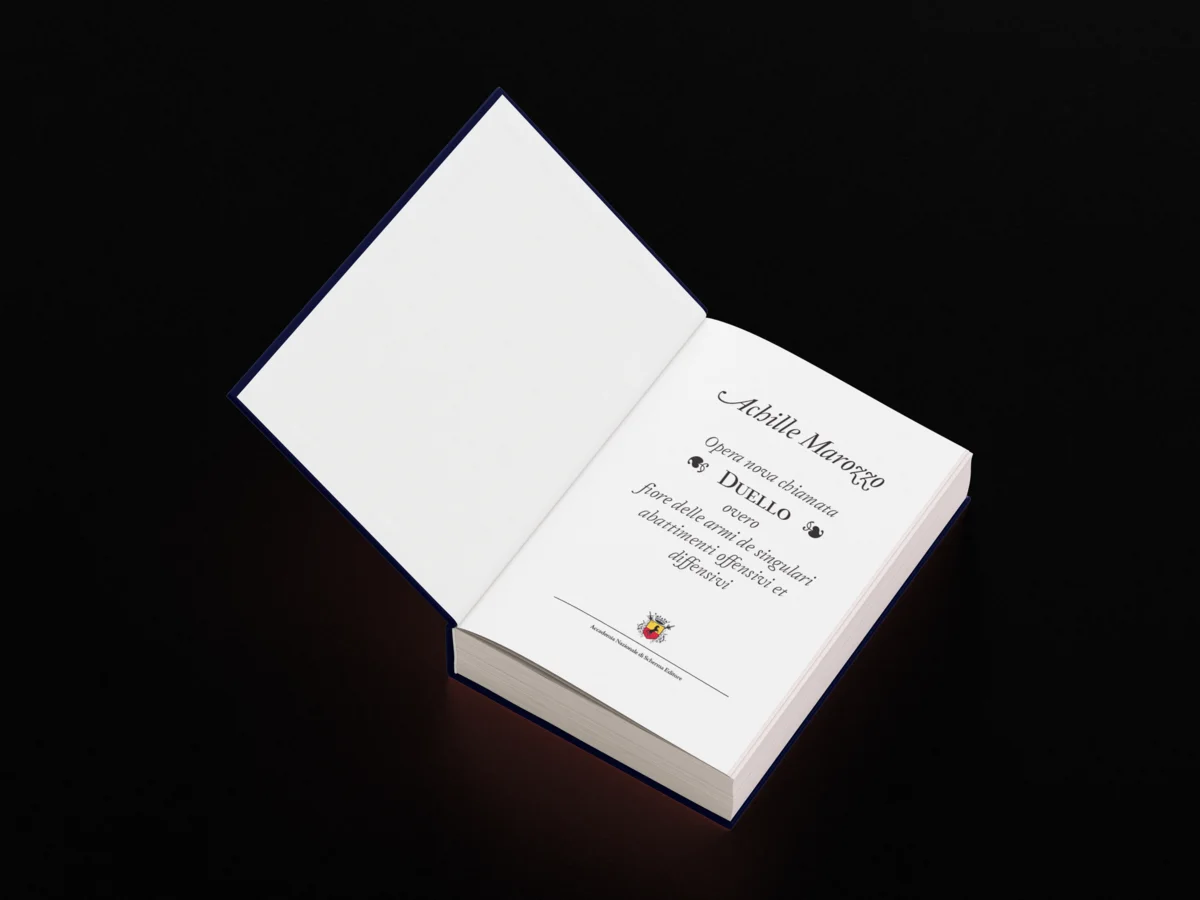
Opera nova chiamata Duello, overo Fiore delle armi de singulari abattimenti offensivi et diffensivi, composta per Achille Marozzo gladiatore bolognese.
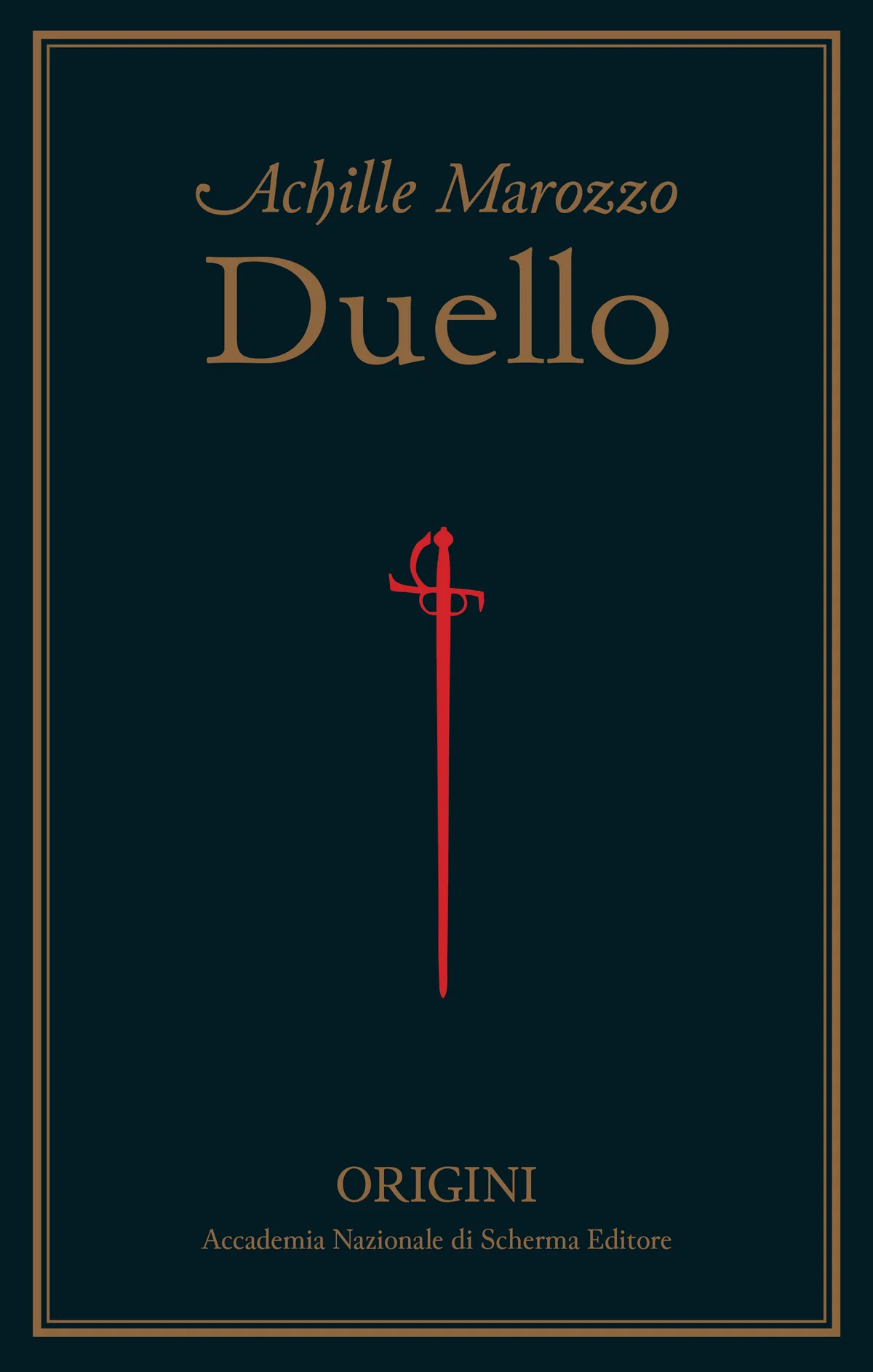
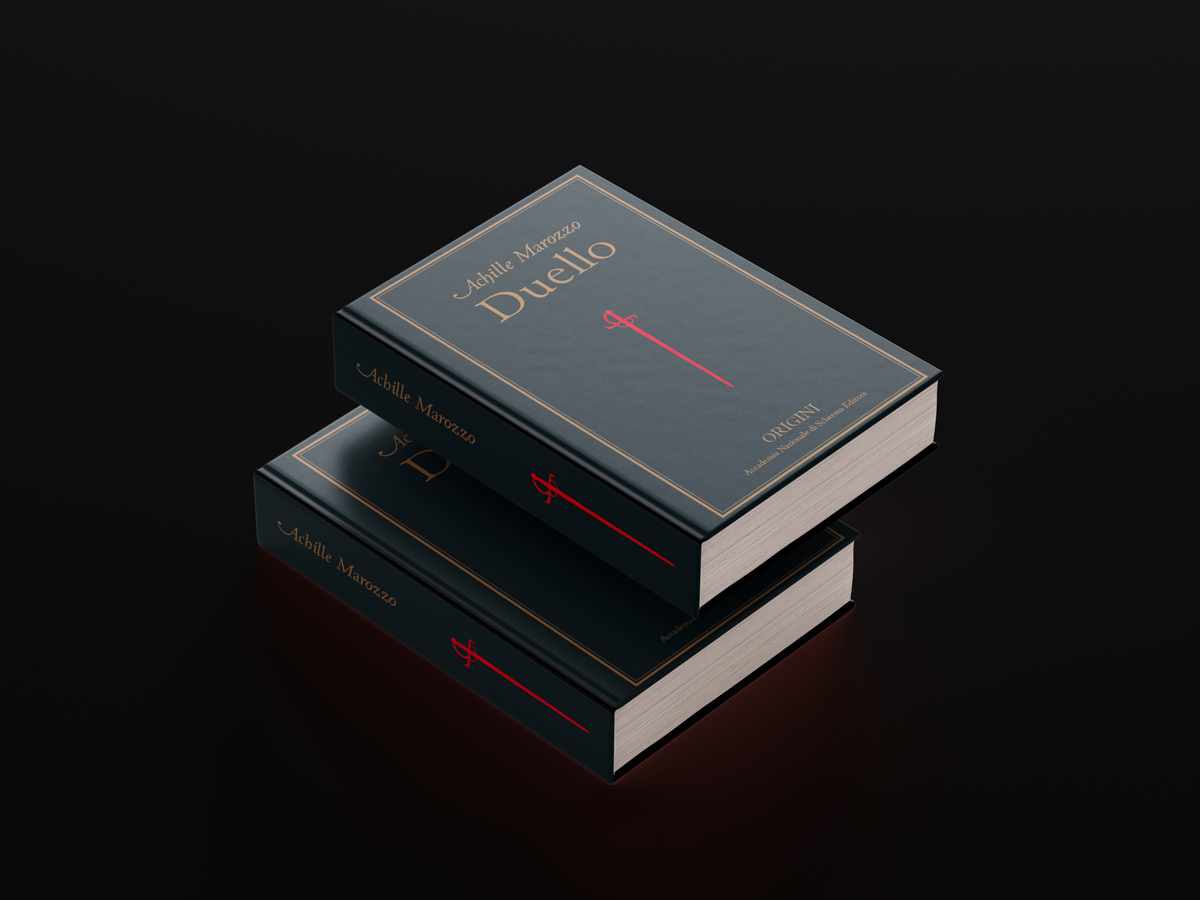
Achille Marozzo's treatise Duello represents a milestone in the history of Italian Renaissance fencing. Originally published in 1536 in Modena, this volume constitutes one of the most complete and systematic codifications of the fencing art of the period, profoundly influencing successive generations of masters of arms.
Marozzo, a prominent exponent of the Bolognese school, presents in this work an articulated and coherent combat system with an extraordinary array of dueling weapons. The treatise stands out - beyond the quantity and quality of its content - for its "modern" scientific approach that combines rationalization and tradition, for the splendid woodcuts accompanying the text, and for the space dedicated to the law of dueling.
This critical edition, curated by Niki Corradetti and Marcello Villanova for the ORIGINI series, presents a philologically accurate transcription of the original text, accompanied by an in-depth set of historical and technical notes and an introduction outlining the collection and its editorial aims. The volume also includes a comprehensive biography enriched with previously unpublished information that systematically reorganizes all known data about Marozzo and his family, helping clarify the historical context and dispel several enduring myths. The work is intended for both scholars of fencing history and practitioners of European historical martial arts, providing a valuable tool for understanding the roots of the Italian fencing tradition.
Edition Details
Modern Edition
- •Publication Date:2025 December, 2
- •Publisher:
 National Fencing Academy Publisher
 - •ISBN:979-12-80230-45-4
Technical Specifications
- •Format:6 x 9 inches
- •Pages:453
- •Binding:Hardcover

Volume Contents
Historical Introduction
Contextualization of the work within the history of Renaissance fencing and the cultural life of the 16th century, along with an in-depth biographical account of Achille Marozzo.
Critical Apparatus
The critical apparatus allows us to appreciate a work as close as possible to the author's intention, while fully preserving the information contained in the witnesses.
Illustrative Apparatus
High-definition and complete reproduction of the woodcuts contained in the first edition of the work.
Errata
Corrections for typographical and textual errors.
On p. 223, note 212, the internal cross-reference is incorrect: “Vedi nota 202” should read “Vedi nota 210”.